
Fees and commissions: the map to not lose money
April 23, 2026
You sell the same product on Amazon and on MercadoLibre, you set a price that looks healthy, and at the end of the month the bank tells a different story than your spreadsheet. It isn’t that you sold less: it’s that every sale carried a layer of fees that wasn’t in plain sight when you published the listing. The category commission, the closing fee, the shipping cost the marketplace deducted, the FBA or Full handling charge, withheld tax, the payment processing fee. Each one is small. Together they eat the margin you thought you had.
The real problem isn’t that fees exist. Every seller knows that. The problem is that they live in different places, under different names, and they change without warning. Amazon Seller Central gives you one fee report; MercadoLibre, another with its own logic; your 3PL, a monthly invoice that arrives days later. To know what you actually earned on a single unit, you end up exporting three files, pasting them into Excel, and doing subtraction by hand. And by the time you have the number, it’s already last week’s snapshot.
This article builds the map: which fees exist on each channel, where they hide, why your homemade math almost always comes up short, and why a single source of truth in real time changes how you decide a price.
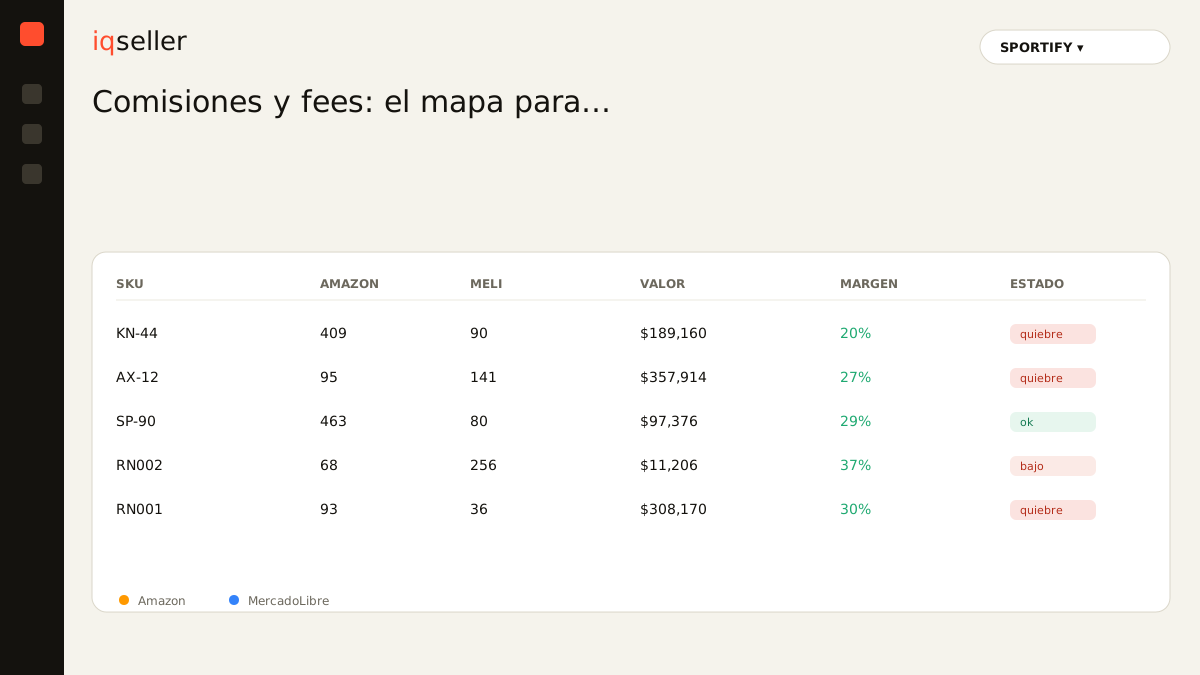
the fee you see and the one you don’t
When you publish, the marketplace shows you the sale commission as a clean percentage: “16% for the category.” It’s honest, but it’s only the tip. Underneath live charges that never appear on that screen and that you only discover when the payout lands.
On Amazon, beyond the referral fee, there’s the fulfillment fee if you use FBA, which depends on the real weight and dimensions of the package once it reaches the center. If your product weighs one gram more than you declared, you jump a tier and pay more per unit, forever, until you fix it. There’s also a monthly storage fee that spikes in peak season, and the dreaded long-term storage fee for inventory that doesn’t move.
On MercadoLibre the commission changes with the listing type (Classic or Premium) and with whether the price crosses the free-shipping threshold, which triggers a logistics cost you absorb. Full adds its own storage and handling fee. The “visible” fee of 13% or 16% is never what you actually pay to move one unit.
Dictionary: a unified catalog merges the same product across all your channels into one card, so you see its real consolidated fee instead of three loose percentages.why your Excel margin lies
The typical homemade calculation is: price minus product cost minus visible commission equals profit. That number is almost always inflated, for three reasons.
First, rounding. When you work by hand you apply the commission percentage to the “list” price, but the marketplace often calculates it on the tax-inclusive price, or on the total the buyer paid including shipping. The base changes and so does the amount.
Second, the variable fees you leave out of the formula because they don’t fit: the return that landed three weeks later and ate the commission plus the reshipment, the inventory adjustment the 3PL charged, the label fee you added yourself. Those never make it into the Excel cell, which is exactly why the spreadsheet always looks better than the bank.
Third, time. Your sheet reflects the rates you copied the day you built it. Marketplaces adjust category commissions, shipping costs, and storage fees several times a year, sometimes without a notice you read in time. You decide today’s price with a fee table from four months ago.
the pain of stitching three invoices
Picture a store like SPORTIFY selling supplements on Amazon with FBA, on MercadoLibre with Full, and managing part of its inventory through an external 3PL. To compute the real margin of a single SKU, someone has to open Seller Central, download the fee report, open MercadoLibre, download the commission report, wait for the 3PL’s monthly invoice, and cross-reference everything by product. If the SKU sells on all three, you have to reconcile three different formats for identifying the same item.
That work gets done once a month, when there’s time, and by then you’ve already made fifty pricing decisions without it. The cost isn’t just lost hours: it’s deciding blind. You raised a price that already had a healthy margin and lost sales; you dropped another that was actually underwater because of hidden fees and sold more units in the red.
Dictionary: the EAN/GTIN is the code that identifies the same product on any channel; without it, reconciling fees between Amazon and MercadoLibre is guesswork.the cost that decides who wins the offer
There’s a fee that appears as a line on no invoice but defines your profitability: the cost of competing for the featured spot. To win the Buy Box on Amazon or visibility on MercadoLibre, many sellers drop price automatically without recalculating whether that new price still covers every fee. You win the position and lose money on each conversion.
The only way to compete without bleeding is to know your real floor: the minimum price per channel below which the unit loses, counting commission, logistics, taxes, and expected returns. That floor is different on Amazon and MercadoLibre for the same product, because the fee structure is different. Fighting for position with a single mental number for both channels is like running two races at the same pace.
Dictionary: the Buy Box is the featured purchase spot; fighting for it with discounts without recalculating fees is the quietest way to sell at a loss.one source of truth, in real time
The way out isn’t a better Excel. It’s to stop building the number by hand. When each channel’s fees flow in automatically, mapped to the same product by its identifier, and update when the marketplace changes them, real margin stops being a month-end calculation and becomes a live figure you can look at before touching a price.
That’s what a consolidated panel solves: you see, per SKU and per channel, the price, every fee actually applied, the product cost, and the net margin left. When a commission goes up, you see it that day, not at reconciliation. When a return wipes out the profit of three sales, it shows up in the same place. The pricing decision moves from being a bet to being a reading.
If you want to see how this connects to planning prices across the year, the automatic price calendar starts from this same real margin to schedule changes without a peak-season fee slipping past you. And if your underlying question is which logistics suits you, the comparison in FBA vs Full: costs, data and a real comparison leans on these same numbers so you don’t compare apples to oranges.
what to review this week
You don’t need to rebuild your whole accounting to start plugging leaks. Take your five highest-volume SKUs and, for each, gather the price, the real commission charged on the last payout, the logistics cost per unit, and the return rate for the quarter. Subtract it all from the price. If the margin left is smaller than the one in your head, there’s the leak, and it’s almost always in the fee you weren’t looking at.
Then repeat the exercise comparing the same SKU across Amazon and MercadoLibre. You’ll find that the same product, at the same price, leaves different margins by channel. That difference is your map: it tells you where to push volume, where to raise price, and where, frankly, it’s worth stopping selling at a loss. The goal isn’t more reports. It’s one trustworthy, up-to-date number that tells you the truth before the bank does.