
Real-time inventory valuation: how much capital is tied up
May 18, 2026
When you sell across several marketplaces, inventory stops being a list of boxes in a warehouse and becomes money scattered across many places at once. You have units in an FBA fulfillment center, others at your 3PL, some reserved for a MercadoLibre order, and a few more in transit from your supplier. Every one of those units cost money: what you paid the manufacturer, freight, duties, storage. That money is sitting there, frozen, waiting to turn into a sale. The uncomfortable question almost no seller asks every day is simple: how much capital is tied up right now?
Most sellers answer with a number that’s weeks old. They pulled it from an Amazon Seller Central report downloaded last month, added a rough guess of what’s at the 3PL, and multiplied by a unit cost that may have already changed because the latest batch arrived more expensive. The result is an approximate valuation, built by hand, that ages by the hour. For a small decision it’s fine. For deciding whether to place a six-figure replenishment order, or whether to drop price to free up cash, that stale number can cost you dearly.
The root problem isn’t that you can’t add. It’s that the information lives in separate systems that don’t talk to each other, and pulling it together always ends in the same place: a spreadsheet built under pressure, with yesterday’s data, that today’s decisions depend on. Real-time inventory valuation exists precisely to close that gap between what’s happening across your channels and what you see when you actually need to decide.
what it actually means to value your inventory
Valuing your inventory means answering, in money, how much everything you have available to sell is worth. It sounds trivial, but it has traps. First, do you count at cost or at selling price? The valuation that matters for understanding tied-up capital is at cost: what it cost you to put each unit into a sellable position. If you value at selling price, you’re counting profits that don’t yet exist and that depend on fees, discounts and returns.
Second, which cost do you use when you bought the same SKU at three different prices across three batches? This is where accounting methods come in —FIFO (first in, first out), weighted average cost— and the answer genuinely changes your valuation. A seller who ignores this usually applies “the last cost I remember” to everything, which distorts both the value of the inventory and the margin they think they have per unit.
Third, and most often forgotten: you should only value what you can truly sell. Damaged stock, units held over a listing issue, or stock blocked in a warehouse is not productive capital; it’s trapped capital. That’s why serious valuation starts from the Dictionary: real available is the stock you can sell today, already net of reservations, damaged units and stock in transit not yet received. Valuing on total stock inflates the figure and makes you feel more backed than you are.
why yesterday’s snapshot lies to you
Inventory moves on its own, without you touching it. While you sleep, FBA shipped orders, MercadoLibre reserved units for purchases in progress, and your 3PL received a new batch you haven’t logged yet. If your valuation is calculated once a day —or worse, once a week— you’re making decisions about a reality that has already changed.
The lag has a concrete cost. Imagine you believe you have 800 units of your star product valued at a certain amount, and based on that you decide not to replenish yet. But 200 of those units are already committed to orders and another 90 arrived defective. Your real available was much lower, your sellable capital too, and the stockout arrives sooner than the spreadsheet announced. Real-time valuation isn’t a pretty-dashboard luxury: it’s the mechanism that keeps your capital number glued to reality minute by minute, instead of glued to the last time you had a moment to update the sheet.
When you consolidate every channel into a single source of truth, you stop asking “what date is this number from?”. If you want the full logic of why live data changes how you operate, it’s worth reading the pillar on real-time inventory, which explains how movements sync across marketplaces without manual intervention.
the hidden cost of frozen capital
Every dollar locked in inventory is a dollar not doing something else. It’s not paying for ads, not funding a launch, not sitting in your account as a cushion. That’s the opportunity cost of tied-up capital, and it grows silently when you have low-rotation SKUs piling up units “just in case.”
Real-time valuation lets you see not only how much capital is tied up, but where it’s stuck. A single SKU can represent a huge share of your total valuation while selling three units a month. That’s dead money. Without a consolidated view, that excess hides behind the average: you see a “reasonable” total inventory value without noticing it’s concentrated in products that don’t move.
On top of that comes storage cost, which in FBA scales with time and penalizes aged inventory. Frozen capital doesn’t just stop earning: it starts costing you every month it stays. That’s why useful valuation isn’t an isolated number, but one you cross with sell-through speed, days of cover and storage cost to know which inventory works for you and which is charging you rent.
multichannel: the same product, several truths
The real pain of the multichannel seller is that the same SKU lives in systems that count differently. Amazon gives you one set of figures, MercadoLibre another, your 3PL its own spreadsheet. When you try to add them up to value, you find the units don’t reconcile: there are sync lags, phantom units one channel thinks it has and another already shipped, and reservations only one system knows about.
Reconciling this by hand is exhausting and error-prone. You paste three exports into a sheet, fight with SKUs named differently on each platform, and end up with a valuation nobody would sign with confidence. That chaos of duplicated or vanished units across platforms has its own name and treatment; we cover it in depth in phantom inventory across Amazon, MELI and 3PL, because without first fixing the count, no valuation will be reliable.
The Dictionary: inventory valuation is the total monetary value of your available stock, calculated at cost and consolidated across all your channels. only makes sense when built on a unified count. That’s why order matters: first a single source of truth for units, then the valuation in money over those correct units. Doing it backwards is decorating a wrong number.
which decisions a live valuation unlocks
An up-to-date valuation stops being an accounting figure and becomes an operational tool. You use it to decide replenishment with judgment: if you know how much capital is already tied up and how fast each SKU rotates, you can size the next order without overstocking or coming up short.
You use it to free up cash. If you see certain inventory has been frozen for months, you can adjust pricing, run a promotion, or move it to a channel with more demand before storage cost keeps eating your margin. You use it to anticipate shortage risk: crossing the valuation with sell-through speed tells you how many days of cover you have and when a Dictionary: a stockout happens when a SKU runs out of real available stock and you lose sales, position and, on marketplaces, listing ranking. you didn’t see coming is approaching.
And you use it to speak in real numbers in front of a lender, a partner, or your own financial planning. When someone asks how much your inventory is worth, the difference between answering “around that much, let me check” and showing a live, consolidated, traceable figure is the difference between operating blind and operating with control.
what this looks like in daily practice
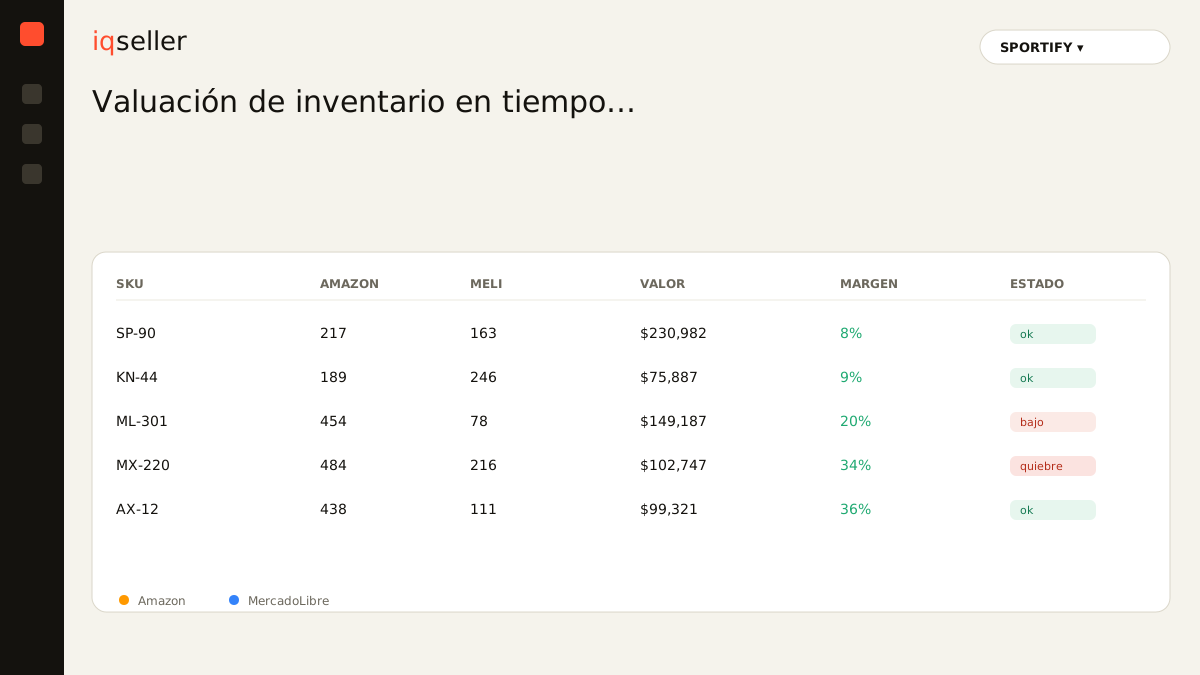
A seller like SPORTIFY, moving dozens of SKUs across Amazon Mexico, MercadoLibre and a 3PL, doesn’t need a monthly report: they need to open a panel and see, right now, how much capital is tied up, how it splits by channel, and which SKUs concentrate the value. They need that figure to already net out reservations, damaged units and transit, and to use the correct cost per batch without anyone calculating it by hand.
That’s the concrete promise of consolidated real-time valuation: stop building spreadsheets under pressure, stop deciding on yesterday’s data, and stop doubting your own number. It’s not magic or a decorative dashboard; it’s what happens when all your sources feed one truth and that truth is translated into money automatically.
The tied-up capital was always there. The only difference is whether you see it in time to do something or discover it once it has already cost you a sale, a miscalculated promotion, or an order you shouldn’t have placed. Knowing how much capital is tied up, now and not last week, is the foundation of almost every important decision a multichannel seller makes.